
Introduction to Effective Puppy Training
Starting your puppy training journey is an exciting milestone for every new dog owner. Early education sets the stage for a calm, well-behaved, and confident lifelong companion.
Proper puppy training does not require harsh discipline or force. By focusing on positive reinforcement and clear communication, your young dog will learn essential skills quickly while building a strong bond with you.
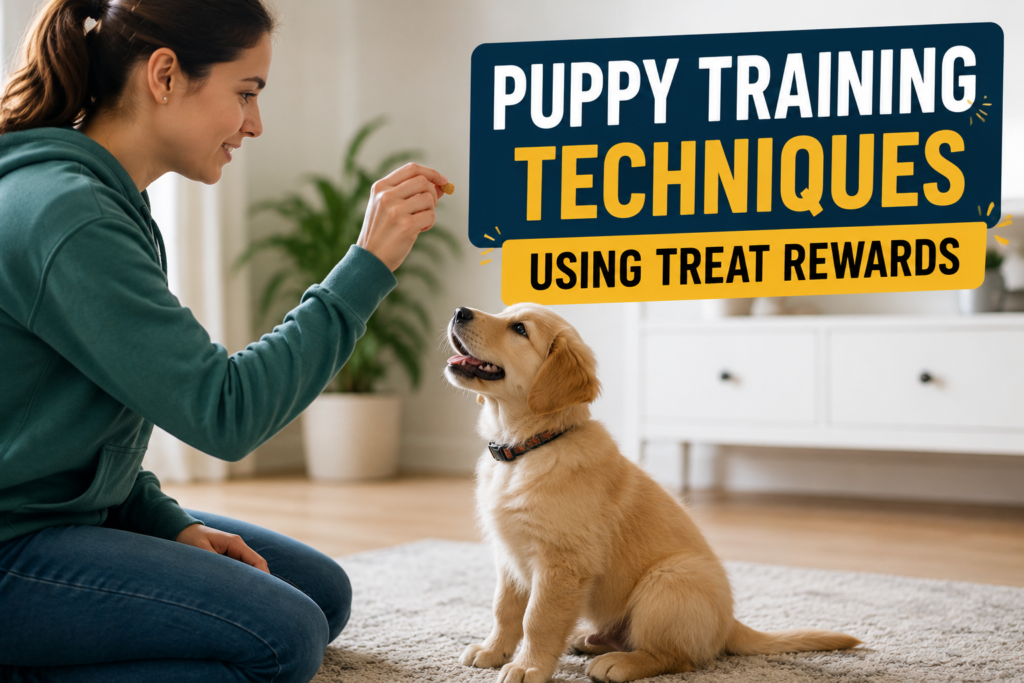
Building a Foundation with Positive Reinforcement
The core of successful puppy training lies in teaching your dog the difference between desirable and undesirable behaviors using positive outcomes.
Focus on “Yes”: Mark every good behavior immediately with an upbeat “Yes!” followed by a high-value treat.
Keep “No” Calm: Avoid shouting or reacting out of frustration. Neutral correction helps prevent fear and confusion.
Consistency Matters: Ensure everyone in your household uses the exact same verbal cues and reward structure.
Mastering Impulse Control with “Leave It”
Impulse control is one of the most vital life skills in puppy training. It prevents your dog from eating dangerous items off the floor or rushing toward unwanted distractions.
Step-by-Step “Leave It” Method:
- Closed Hand Practice: Hold a treat inside a closed fist. Let your puppy sniff or paw at your hand without opening it.
- Reward Voluntary Ignorance: The instant your puppy turns their head away, mark with “Yes!” and give a treat from your other hand.
- Open Hand Progression: Place a treat in an open palm. If your puppy lunges, close your hand quickly. Once they hesitate and back off, reward them.
- Introduce Cues & High-Value Items: Add the verbal cue “Leave it” and practice with higher-value treats like real cooked chicken once basic restraint is established.
Building Unshakable Focus: The “Look at Me” Command
Direct eye contact is the foundation of engagement. If your puppy is not looking at you, they are not paying attention to your directions.
How to Teach Direct Eye Contact:
- Get down on the floor to be at eye level with your pup.
- Hold a treat near your puppy’s nose and slowly pull it up toward your eyes.
- The moment your puppy looks directly into your eyes, say “Yes!” and reward them instantly.
- Practice increasing the eye-contact duration to 2-3 seconds before delivering the reward.
The Power Combination: “Leave It” + “Look at Me”
Combining two commands creates high levels of mental focus and self-restraint.
Drop a tempting treat on the floor and give the command “Leave it.”
Immediately follow up with “Look at me.”
When your puppy successfully ignores the treat on the floor and looks up at your face, reward them with a higher-value treat directly from your hand.
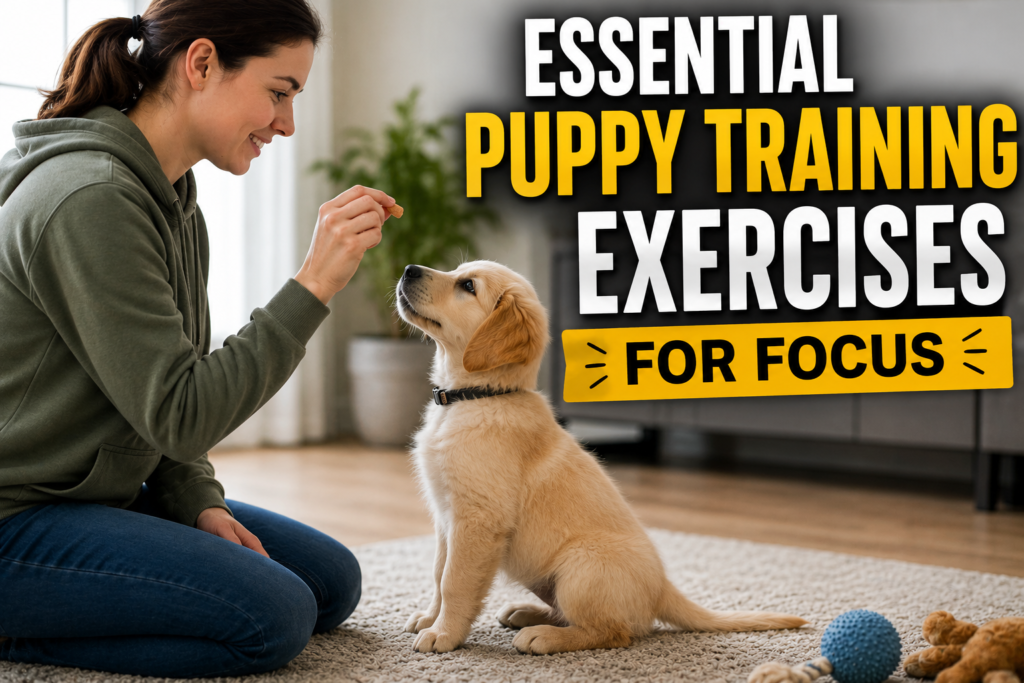
Lure Training: Sit, Down, and Stand
Lure training guides your dog naturally into physical positions using a piece of food held near their nose.
Sit: Hold a treat right in front of your puppy’s nose and slowly move it backward over their head. As their nose tilts up, their rear end will naturally sit down.
Down: From a sitting position, lower the treat straight down to the floor between their front paws and pull it slightly forward.
Stand / Up: Pull the treat horizontally away from their nose while in a sit or down position to encourage them onto all four paws.
Name Recognition & Early Recall
Your puppy must associate their name with positive, rewarding outcomes every single time.
Use an upbeat, high-pitched tone when saying their name.
The instant they turn and move toward you, mark with “Yes!” and offer a treat.
Never use your puppy’s name when scolding or punishing them, as this creates anxiety during recall.
Daily Routine and Healthy Socialization
Consistent routines make potty training and daily behavior management smooth and predictable.
Potty Management: Keep puppy pads near exits and establish a regular schedule for outdoor trips immediately after naps and meals.
Structured Play: Allow controlled, positive interactions with friendly, well-socialized adult dogs to build healthy social skills.
Short Training Sessions: Keep training sessions brief (5 to 10 minutes) to match a young puppy’s natural attention span.
Conclusion
Effective puppy training is a rewarding process that requires consistency, patience, and positive reinforcement. By mastering fundamental skills like impulse control, eye contact, basic lures, and recall early on, you set your puppy up for a happy, well-behaved life.
Start with short, daily training sessions, keep learning fun, and celebrate every small victory along the way!