
German Shepherd Dog (GSD) puppies experience rapid growth phases. While high-quality commercial kibble is widely available, many pet parents prefer following a comprehensive
Homemade Diet Guide for German Shepherd Puppies to supplement their dog’s meals with fresh food. If you are planning to feed a home-cooked diet to your young GSD puppy, this complete guide covers what foods are safe, what ingredients to avoid, and how to maintain optimal health.
Important Disclaimer:
This article is intended solely for educational purposes. Every puppy has unique nutritional requirements based on its health profile.
Always consult a certified veterinarian before making significant changes to your German Shepherd puppy’s diet or supplement routine.
1. The Golden Rule: Mother’s Milk and Weaning
- Duration: For the first 4 to 6 weeks, a puppy must rely entirely on its mother’s milk.
- Immunity: Mother’s milk contains vital colostrum that builds lifelong immunity.
- Transition: Moving to solid, homemade food should only begin around 1.5 to 2 months of age, once the weaning process is naturally complete and the puppy is fully transitioned off the milk.
2. Safe Foods Under the Homemade Diet Guide for German Shepherd Puppies
When a GSD puppy is under 5 months old, its digestive tract is incredibly sensitive. Stick to these safe, bland kitchen-friendly ingredients:
Healthy Probiotics & Dairy
Plain Yogurt & Buttermilk:
These are excellent sources of natural probiotics that support gut health. You can mix a small spoonful into their meals. However, avoid serving them during freezing winter months due to their cooling nature.
Cottage Cheese:
This is very high in calcium and protein. However, you should treat this as an occasional snack or high-value training treat, not a daily meal base.
Clean Grains & Lean Proteins
- Boiled White Rice: This is extremely gentle on a puppy’s stomach and very easy to digest.
- Boiled Chicken: For puppies under 8 weeks old, stick strictly to unseasoned chicken broth (soup). For older puppies, you can introduce shredded, skinless, boneless boiled chicken 2–3 times a week. Never add salt, onions, garlic, or spices while boiling.
- Boiled Eggs: A fantastic source of protein and amino acids for a GSD’s muscular development. Always serve eggs fully boiled and chopped into small pieces; never feed raw eggs.
- Textured Vegetable Protein (Soy Chunks): If using soy, thoroughly boil it in plain water, squeeze out excess liquid completely, and mince it into tiny pieces so it does not present a choking hazard for a small puppy.
Puppy-Safe Vegetables & Fruits
- Vegetables: Carrots, pumpkin, green peas, and spinach provide great dietary fiber and vitamins. Always steam or lightly boil them first, then finely chop or mash them before mixing into rice.
- Fruits: Fresh bananas and apples make great vitamin-rich snacks. Always serve them fresh and raw; do not cook or boil the fruits.
- Crucial Fruit Safety Note: Always peel the apple and completely remove all seeds, as apple seeds contain cyanide compounds which are highly toxic to dogs.
- Seasonal Extras: You can give small pieces of fresh, seedless watermelon or cantaloupe in the summer, and plain boiled sweet potato slices in the winter.
3. Personal Experience: Practical Insights from a GSD Caregiv
Based on firsthand experience raising and closely monitoring German Shepherds, here are a few practical insights you won’t typically find on a commercial pet food label:
- The 24-Hour Stool Check: Whenever you introduce a new whole food (like a piece of boiled egg or apple) for the very first time, monitor your puppy’s stool for the next 24 hours. If they develop loose stools, it indicates their digestive system isn’t ready for that specific ingredient.
- Establish Strict Feeding Windows: Avoid free-feeding your puppy throughout the day. Serve their meals in 3 to 4 small, scheduled portions. Remove the food bowl after 15 minutes. This creates a healthy digestive rhythm and ensures they maintain a robust appetite.
- The Secret to a Shiny Coat: Diets heavy in table scraps, sodium, or wheat bread quickly dull a GSD’s coat and trigger excessive shedding. Introducing balanced amounts of boiled egg and plain yogurt visibly enhances the density and shine of their double coat.
4. Foods to Avoid: Severe Allergy & Health Risks
German Shepherds are historically prone to skin allergies, food sensitivities, and gastrointestinal issues. Strictly eliminate the following from their bowls:
- Whole Cow’s Milk & Wheat Bread: Whole milk and wheat flour products frequently trigger lactose intolerance and gluten allergies in GSD puppies. This can result in severe diarrhea and intense hair fall.
- Cooked Chicken Bones: Never allow your puppy to chew on cooked bones. Cooking makes bones brittle, causing them to splinter into sharp shards that can easily lacerate your puppy’s throat, stomach, or intestinal walls.
- Onions, Garlic, Salt, and Sugar: Never add any seasonings to homemade dog food. Onions and garlic cause hemolytic anemia in canines, while excess sodium and sugar can severely damage their liver and kidneys.
5. Veterinary Advice: Critical Medical Considerations
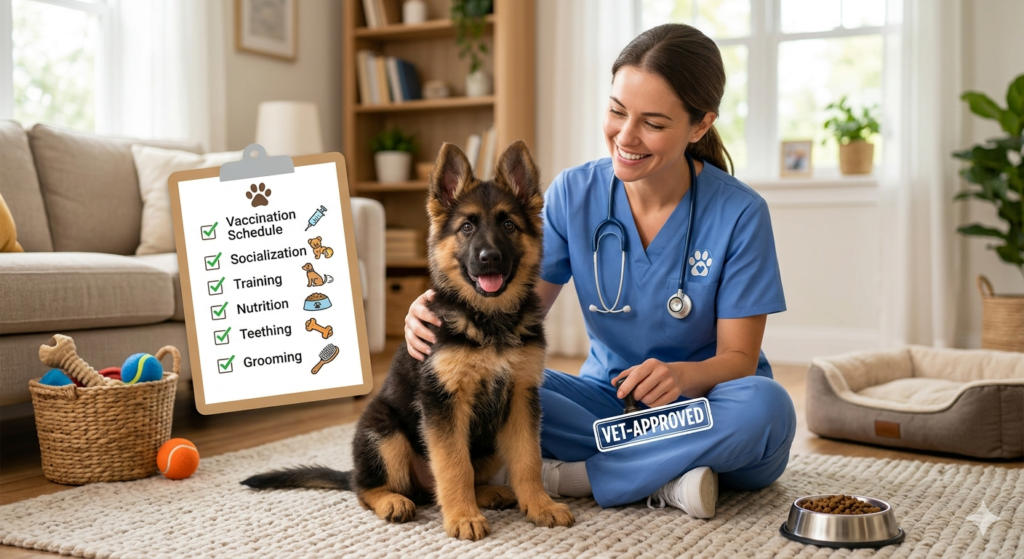
Because German Shepherds are a large-breed canine, veterinary experts emphasize that their rapid growth requires precise nutritional tracking:
- The Calcium-to-Phosphorus Ratio: GSD puppies grow at an exponential rate. If a homemade diet lacks the correct balance of calcium and phosphorus, their skeletal system will weaken, significantly raising the risk of Hip Dysplasia (hip joint disease) later in life.
- The Kibble Balance: To prevent these joint issues, vets recommend feeding at least one meal a day of high-quality commercial large-breed puppy kibble to secure their micro-nutrients, using homemade food for the remaining meals.
- Avoid Supplement Overdosing: Avoid administering heavy calcium supplements or vitamins without a professional veterinary prescription. Excess calcium can accelerate bone growth incorrectly, leading to joint deformities like knuckling over. Always get a physical exam done by your vet before introducing any health supplements.
- Spotting Food Allergies: If your puppy begins excessively licking its paws, scratching its body, or showing red, irritated ears after consuming a certain home-cooked meal, it is likely an allergic reaction. Halt the diet immediately and seek professional veterinary guidance.
6. Supplements and Deworming Routine
- Achieving Balance: Maintain a smart balance by combining a premium large-breed puppy kibble with fresh homemade ingredients. This keeps your monthly budget manageable while keeping your puppy completely nourished.
- Routine Preventive Care: Follow a strict deworming schedule prescribed by your vet and support their metabolic health with an appropriate, vet-approved liver tonic immediately following their deworming cycles.