
Medical Disclaimer:
Rabies is a 100% fatal viral disease affecting mammals and pets. The information in this article is compiled from registered veterinary guidelines, clinical case observations, and professional medical frameworks for educational purposes.
If you suspect your dog or any animal has been exposed to rabies, isolate them immediately and contact a licensed veterinarian or local animal control. Do not attempt to handle a potentially rabid animal yourself.
Discovering that a pet or a human might be exposed to a deadly virus is an absolute nightmare. Knowing the exact dog symptoms of rabies is the only way to safeguard your home.
Rabies is a highly contagious, zoonotic viral disease—meaning it transmits rapidly from animals to humans through infected saliva via deep bites or superficial scratches. Once clinical signs manifest in the central nervous system, the condition becomes completely untreatable and fatal anywhere in the world.
Table of Contents
Which Animals Carry the Rabies Virus?
The Brain Proximity Rule in Rabies Infection
Real-Life Case Study: Transmission Through a Gate Barrier
The 3 Clinical Stages and Dog Symptoms of Rabies
How Rabies Spreads to Humans & Health Risks
Emergency Action Plan and First-Aid Protocols
Which Animals Carry the Rabies Virus?
While domestic and stray dogs are responsible for the vast majority of rabies transmissions to humans, they are not the only source. The virus thrives in various wild and domestic mammal populations.
Key carriers include:
- Domestic Pets: Unvaccinated dogs and domestic cats.
- Wild Species and Reservoirs: Mongoose, monkeys, foxes, jackals, and bats act as natural reservoirs for the virus.
The Brain Proximity Rule in Rabies Infection
- After a pet is bitten by an infected animal, the internal dog symptoms of rabies do not appear immediately.
- The 3 to 8 Week Window: Generally, clinical signs begin to manifest within 3 to 8 weeks after exposure, though this timeframe can vary based on the total viral load injected into the body.
- The Proximity Factor: The speed at which symptoms show depends heavily on the physical distance of the bite wound from the dog’s brain. If a dog is bitten near the neck, face, or ears, the virus reaches the central nervous system much faster than a bite on the hind leg.
Real-Life Case Study: Transmission Through a Gate Barrier
Many pet owners face situations where their fully vaccinated domestic pet gets into a vocal fight with a stray, rabid dog through a closed iron gate or boundary barrier.
Even if there are no visible tooth marks, punctures, or blood on your dog’s body, the risk is NOT zero.
Rabies is a viral disease carried entirely in the saliva. If the aggressive stray dog sprays infected saliva through the gate, and that saliva comes into contact with pre-existing skin issues on your pet—such as seasonal monsoon skin rashes, open scratch marks,
or raw areas near the dog’s testicles—the virus can successfully enter the bloodstream and trigger dog symptoms of rabies.
The Early Veterinary Saliva Observation
- When a pet is brought to the clinic with heavy drooling (hypersalivation) after such an exposure, veterinarians often administer targeted injections to curb the drooling.
- If the excessive salivation completely stops within 24 to 48 hours and the dog resumes normal behavior, the drooling was likely caused by a minor viral infection, seasonal rashes, or a throat obstruction.
- However, if the dog continues to refuse food entirely for days, experiences extreme physical weakness, and continues to drool despite medical treatment, veterinarians maintain a strict watch for clinical rabies progression.
The 3 Clinical Stages and Dog Symptoms of Rabies
To catch the infection early, you must understand that the disease progresses through three distinct behavioral and physical phases. Each phase introduces specific, noticeable dog symptoms of rabies.
Phase 1: The Prodromal or Early Stage (Behavioral Shifts)
- This initial phase lasts 1 to 3 days, and the symptoms are often subtle:
- Ignorance of the Owner: A normally loving pet will suddenly start ignoring its owner, barking uncharacteristically at its caretakers, refusing treats, and isolating itself.
- Sudden Change in Temperament: Gentle dogs may become anxious, shy, or mildly aggressive, while naturally aggressive dogs might become unusually affectionate.
- Skin Irritation and Flea Biting: The infected dog will experience intense, invisible irritation across its body, causing them to bite obsessively at “invisible” fleas.
- Anorexia and Fever: The dog will suffer from a total loss of appetite (Anorexia), refuse regular meals, experience mild diarrhea, and run a persistent fever.
Phase 2: The Furious Stage (The Outbreak Form)
- Contrary to popular belief, the Furious form is actually less common in everyday canine cases than the Dumb form, but it is highly responsible for spreading the virus further because of the dog’s violent behavior. It lasts 1 to 7 days:
- Extreme Panic and Sensitivity: Infected dogs show heightened sensitivity to loud noises and bright lights.
- Out-of-Control Excitement: The dog displays maximum amounts of unprovoked excitement and becomes completely unmanageable, running around aimlessly.
- Peak Aggression: The dog will show extreme madness, aggressively chasing and attacking any moving object in its path, including humans, other livestock, or inanimate structures.
- Dilated Pupils and Glassy Eyes: Physically, the dog’s eyes look aggressive with heavily dilated pupils.
- Pica (Eating Non-Food Items): Mental degradation causes the dog to chew or swallow random objects like sticks, stones, or cloth. In severe cases, they may even eat their own stool.
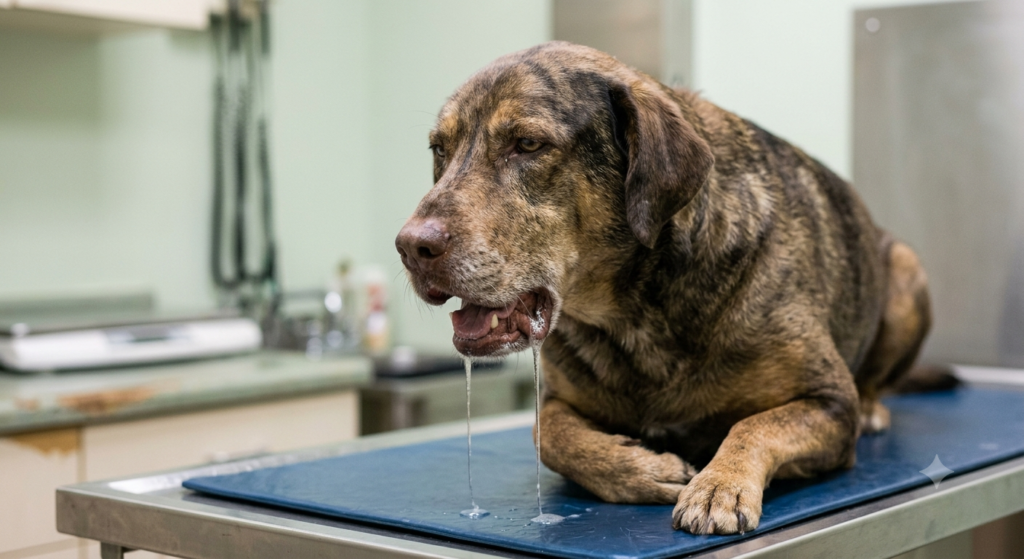
Phase 3: The Paralytic or Dumb Stage (The Most Common Phase)
- Also known as Dumb Rabies, this is the most frequently observed form in dogs. It is highly deceptive because the dog often maintains a friendly, normal demeanor or simply appears weak and depressed, making it incredibly difficult to diagnose. This stage lasts 2 to 4 days, where the animal quickly succumbs to progressive paralysis:
- The Dropped Jaw Condition: The most definitive sign of the dumb form is that the muscles of the lower jaw completely paralyze, causing the jaw to drop and hang loose. The dog loses the ability to close its mouth.
- Severe Foaming and Tongue Wrinkling: Because of jaw paralysis, the dog’s tongue constantly hangs out, eventually developing visible wrinkles and folds. Total paralysis of the throat and mouth muscles makes it impossible for the dog to swallow saliva, leading to non-stop frothing and heavy drooling.
- Myth vs. Fact: Do Rabid Dogs Have Hydrophobia?
- True Hydrophobia (fear of water) is a symptom found almost exclusively in human cases due to painful throat spasms. Dogs and other animals do NOT experience hydrophobia. In fact, a rabid dog feels extreme thirst and will actively try to lap up or play with water. However, because of tongue and jaw paralysis, they cannot swallow a single drop. To verify this clinically, execute the Water Level Test: check the exact water level in the bowl before and after the dog tries to drink. If the level remains unchanged, the dog is suffering from physical swallowing paralysis, not a psychological fear of water.
- Unsuccessful Vomiting Tendency: Infected dogs often showcase a distinct abdominal and thoracic pumping pattern, making violent attempts to vomit. However, because of severe nerve degradation in the throat, they are completely unable to pass anything out, which owners frequently mistake for a basic stomach ache or gastrointestinal blockage.
- Self-Mutilation: Due to intense neurological irritation, a dog suffering from dumb rabies may begin chewing aggressively on its own body parts, tearing at its own skin or limbs.
- Drunken Gait and Sensory Shutdown: The dog displays an altered, abnormal state of consciousness, stumbling around with a “drunken walk” (Ataxia) due to hind leg nerve failure. When brought into a clinical environment, the dog will completely withdraw, showing a total lack of interest or interaction with surrounding stimuli.
- Diaphragm Paralysis & Death: Once symptoms reach this terminal phase, survival chances drop to zero, and death occurs rapidly within 3 to 5 days. The progressive paralysis eventually hits the diaphragm muscles, leaving the dog unable to breathe.

How Rabies Spreads to Humans & Health Risks
- According to the World Health Organization (WHO), dog exposures are responsible for up to 99% of human rabies cases. However, close exposure to unvaccinated canines brings other parasitic and fungal health risks, including:
- Dog Tapeworm Infection: Contracted through accidental contact with infected dog feces.
- Cryptosporidium: A parasitic infection causing severe gastrointestinal distress and diarrhea.
- Dermatophytes: Fungal skin infections (like ringworm) that easily spread from an animal’s fur to human skin.
- The rabies virus relies entirely on infected saliva entering the bloodstream or nerve endings. It spreads through:
- Deep Muscle Penetration: If a bite is deep enough to penetrate the muscles, the risk of transmission is exceptionally high. Simple, dry scratches that do not draw blood or break the skin carry a much lower risk, but still require professional assessment.
- Licking Open Wounds or Mucosa: If an infected animal licks a human on an area with a pre-existing cut, open wound, or directly on mucosal membranes (lips, eyes, nose), the virus can enter the peripheral nervous system without a bite occurring.
- The Dumb Rabies Mouth Trap: Because dogs with Dumb Rabies act friendly and don’t bite, owners often mistakenly assume something is stuck in the dog’s throat and put their bare hands directly inside the dog’s mouth to check. This exposes the owner directly to highly infectious saliva, creating a massive transmission risk.
Human Symptoms and Incubation
Once inside a human, the virus slowly travels toward the brain. In 99% of cases, this incubation window takes a few weeks to several months. Once it hits the brain, human symptoms include extreme agitation, seizures, Hydrophobia (intense fear of water caused by violent throat spasms when attempting to drink), and Aerophobia (fear of fresh air drafts).
Emergency Action Plan and First-Aid Protocols
- If your dog displays any combination of these warning signs, you must adopt strict safety protocols immediately:
- Secure Confinement (Strong Chains/Ropes): At the very first sign of symptoms, securely restrain the dog using a strong metal chain or heavy rope in an isolated corner. Containment is a mandatory safety measure because rabies has no cure, and it is the only way to prevent the dog from biting or exposing family members and other domestic pets.
- Use Heavy Gloves for Handling: If you must provide food or water to a quarantined animal under observation, always wear thick protective gloves. Never check inside a drooling dog’s mouth with bare hands.
- Alert Veterinary Authorities: Contact a local veterinary professional or animal control immediately to diagnose the condition safely. Never attempt to hide a suspected stray dog fight from your veterinarian. Hiding historical exposure facts puts your entire family at extreme risk.
- Immediate Human Post-Exposure Vaccination: If a pet or stray dog passes away after showing these neurological symptoms, or if the dog uncharacteristically bites any handler during its illness, those individuals must seek medical post-exposure vaccination immediately. Professional veterinarians routinely take annual pre-exposure rabies shots as a standard safety protocol, confirming that the vaccine is completely safe with no major side effects.
Immediate 15-Minute Emergency First-Aid Protocol for Human Bites
- If you or anyone around you is bitten or scratched by a suspected rabid animal, execute this emergency protocol immediately:
- The 15-Minute Soap Wash: Immediately wash the wound under open, running tap water with a high-caustic soap for a continuous 15 minutes. The rabies virus is highly sensitive to soap and scrubbing thoroughly can neutralize and wash away the viral load right at the source.
- Keep the Wound Open: Do not apply tight bandages or stitches immediately unless medically directed, as the virus can degrade when exposed to air.
- Seek Urgent Post-Exposure Prophylaxis (PEP): Go straight to a medical facility to begin your Post-Exposure Vaccination schedule. For severe category bites, doctors will also inject Rabies Immunoglobulins directly into the wound site to neutralize the virus on the spot.
Conclusion: Prevention is the Only Cure
Because there is no cure once symptoms appear, routine vaccination is your only absolute protection. Ensuring your domestic dogs and cats receive their regular rabies shots according to veterinary-approved schedules completely neutralizes the threat.