
Canine Distemper is one of the most devastating and deadly viral diseases a dog can face. While pet parents often worry about rabies or parvovirus, Canine Distemper is highly contagious, attacks multiple bodily systems at once, and unfortunately, has no known cure.
Every year, hundreds of thousands of dogs and puppies succumb to this brutal virus globally. Understanding how this virus works, recognizing its multi-stage symptoms early, and knowing your treatment options can mean the difference between life and death for your furry companion.
What is Canine Distemper Virus?
Canine Distemper is a highly contagious disease caused by a single-stranded RNA virus from the Paramyxoviridae family (the same family that causes measles in humans).
What makes this virus incredibly dangerous is that it doesn’t just affect domestic dogs. It originates in the wild, commonly infecting wolves, foxes, raccoons, skunks, and ferrets. The virus has even been known to cause massive outbreaks in zoos, affecting large wild cats like lions and leopards. From wild habitats, it easily spreads into urban areas, affecting stray populations and domestic pets.
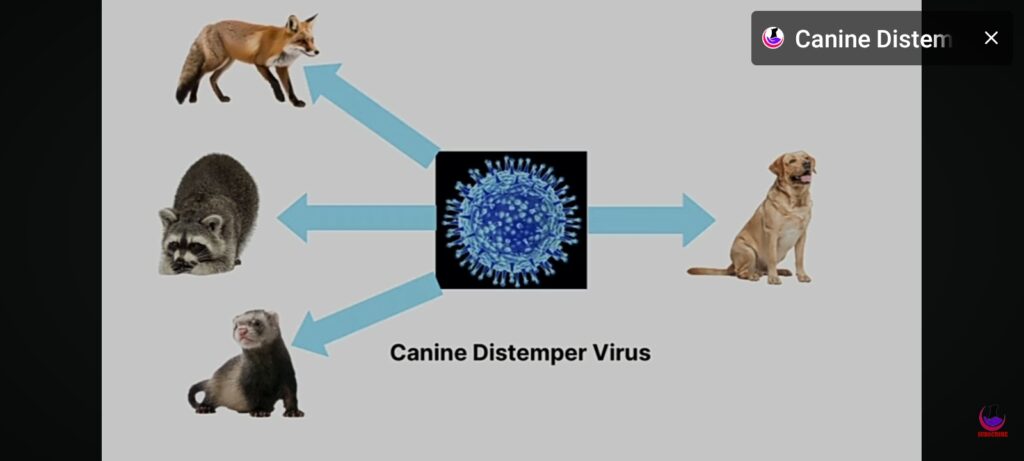
(Caption: How Canine Distemper Virus spreads from wild animals to domestic dogs)
How Does the Virus Spread?
The virus is highly transmissible and spreads similarly to the common cold in humans. It travels through:
Airborne droplets: Sneezing, coughing, or barking.
Direct contact: Shared food bowls, water, or toys.
Environmental sniffing: If a healthy dog sniffs the infected saliva, urine, or feces of an infected animal, the virus hitches a ride into the new host.
The Incubation Period and How It Attacks the Body
Once a dog catches the virus, they won’t look sick immediately. The virus goes through an incubation period of 1 to 2 weeks (7 to 14 days). During this window, your dog will look completely healthy, but internally, the virus is aggressively multiplying.
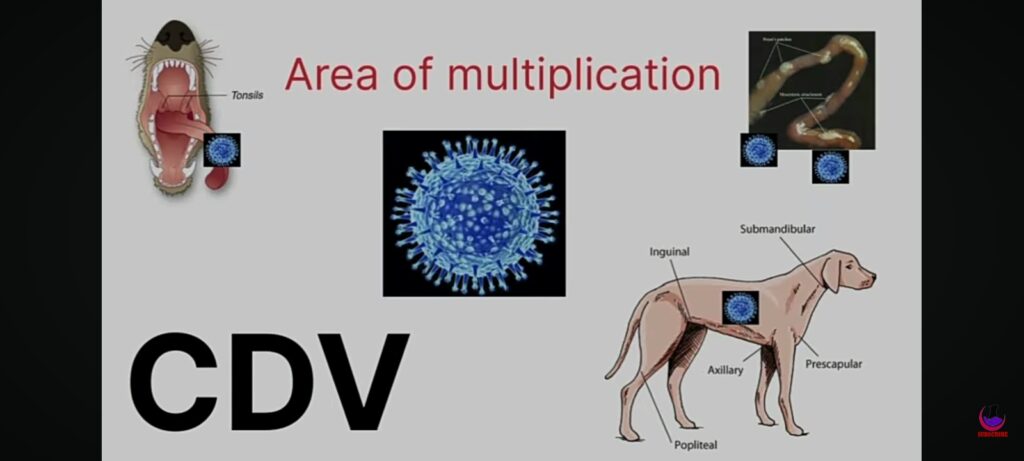
(Caption: Primary areas of multiplication for the Canine Distemper Virus inside a dog’s body)
The virus attacks and multiplies in three main areas of the dog’s body:
The Buccal Cavity: Specifically inside the tonsils.
The Intestines: Inside the specialized immune tissues called Peyer’s patches.
The Lymphatic System: It invades the lymph nodes throughout the body (including Submandibular, Prescapular, Axillary, Inguinal, and Popliteal nodes).
By targeting the lymphatic tissues, the virus destroys the dog’s immune system from the inside out. Because the body’s natural defenses become heavily compromised, the primary focus of any distemper treatment is Immunomodulation—which means doing everything possible to artificially boost and support the dog’s failing immunity.
Early Warning Signs of CDV
As the incubation period ends, the initial symptoms mimic a standard cold or flu. It is crucial to spot these signs before the disease advances.
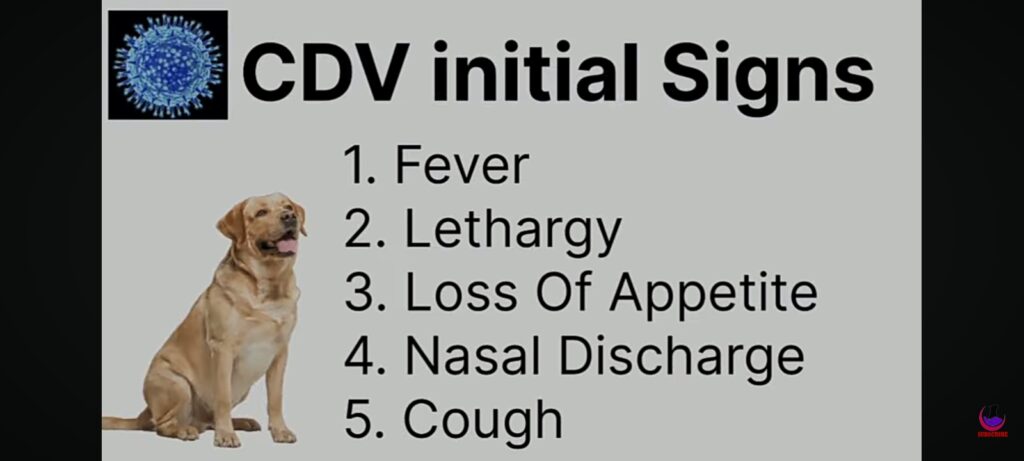
(Caption: The 5 core initial signs of Canine Distemper Virus infection)
The 5 Primary Initial Signs include:
High Fever
Severe Lethargy (Weakness)
Loss of Appetite
Thick Nasal Discharge
Persistent Cough
The Stages of Canine Distemper Symptoms
Because Canine Distemper is a multi-systemic disease, it progressively destroys different organ systems through distinct, critical stages:
Stage 1: The Ocular and Respiratory Stage
The virus first heavily targets the respiratory tract and eyes.
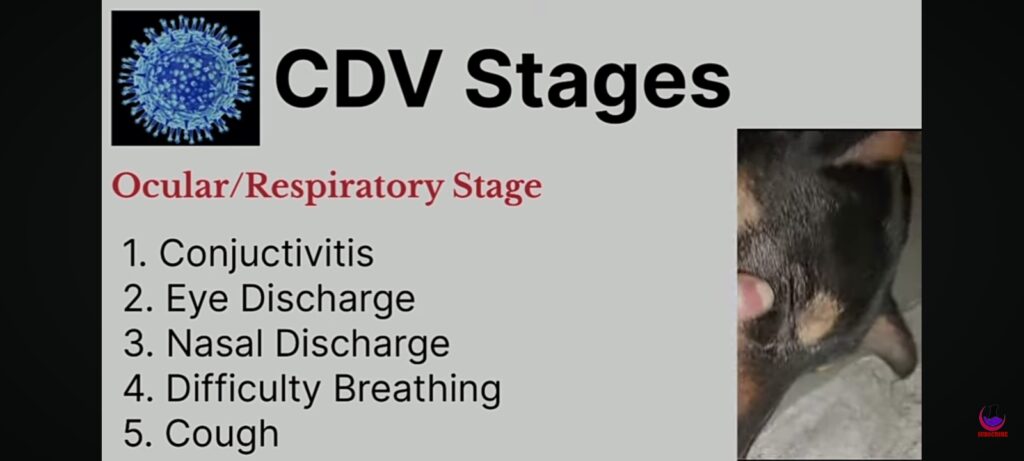
(Caption: Clinical signs of the Ocular and Respiratory stage in affected dogs)
Conjunctivitis: The eyes become bloodshot, red, and inflamed.
Eye & Nasal Discharge: A clear watery discharge from the eyes and nose quickly turns into a thick, sticky, green-yellow mucus (mucopurulent discharge).
Respiratory Distress: The dog will develop a heavy, painful cough and experience major difficulty breathing.
Stage 2: The Gastrointestinal (GI) Stage
As the virus multiplies in the intestinal lining, it disrupts the digestive tract.
(Caption: Gastrointestinal symptoms showing advanced stages of dehydration)
The dog will experience violent vomiting and severe diarrhea.
This leads to rapid, life-threatening dehydration.
Note: While GI symptoms are common, some dogs bypass this stage entirely and move straight from respiratory issues to neurological damage.
Stage 3: The Neurological Stage
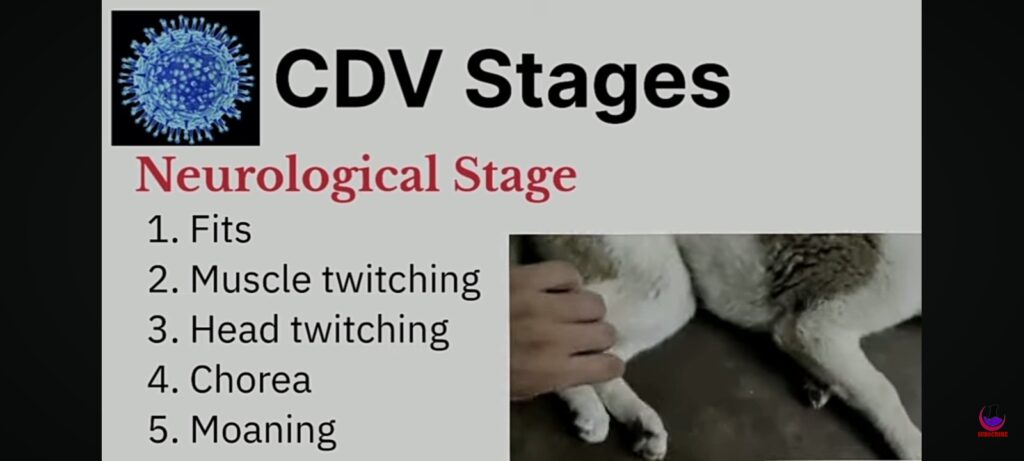
If the dog’s immune system hasn’t fought off the virus yet, it crosses the blood-brain barrier to attack the central nervous system and neurons. This is the most heartbreaking stage for a pet parent to witness
(Caption: Severe neurological symptoms caused by central nervous system damage)
Fits & Seizures: Uncontrollable grand mal or focal seizures.
Muscle & Head Twitching: The dog will experience involuntary twitching in the head and limbs. You may notice “fly-biting” behavior, where the dog snaps at invisible things in the air.
Chorea (Myoclonus): Continuous, repetitive jerking movements of a muscle group that do not stop, even when the dog is sleeping.
Moaning and Vocalization: Dogs often wander aimlessly, appear blind, become uncoordinated, and moan or cry out in distress throughout the night due to neurological confusion.
The Convalescent Phase (“Hard Pad Disease”): If a dog has strong immunity and survives the severe seizures, they enter a chronic phase where the skin on their nose and the pads of their paws becomes incredibly thick, tough, and hard to the touch.
Can a Dog Fully Recover from Distemper?
The harsh reality is that neurons do not regenerate. If the virus successfully damages the dog’s brain tissue or central nervous system, that damage is permanent.
Even if a dog miraculously survives the virus, they rarely make a “complete” recovery. They will likely live the rest of their lives with a permanent muscle twitch (chorea), neurological ticks, or partial paralysis.
Treatment Options: Conventional vs. Alternative Therapies
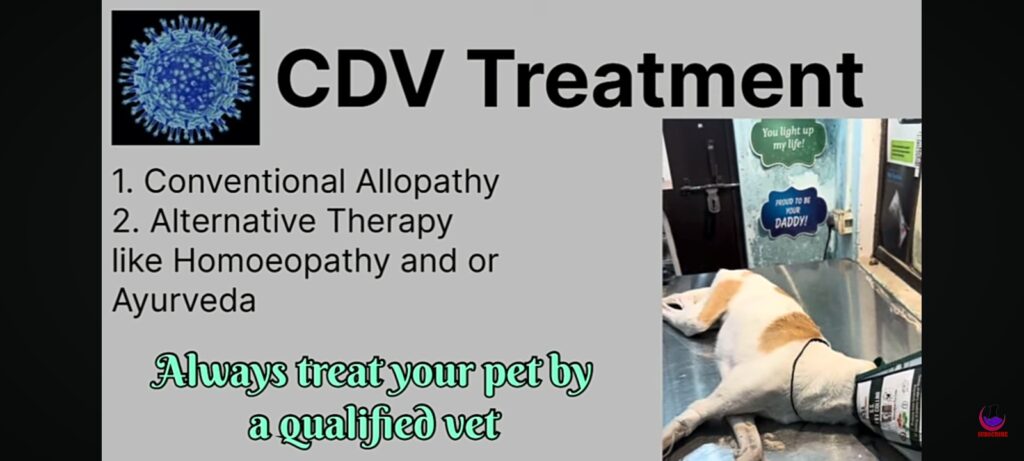
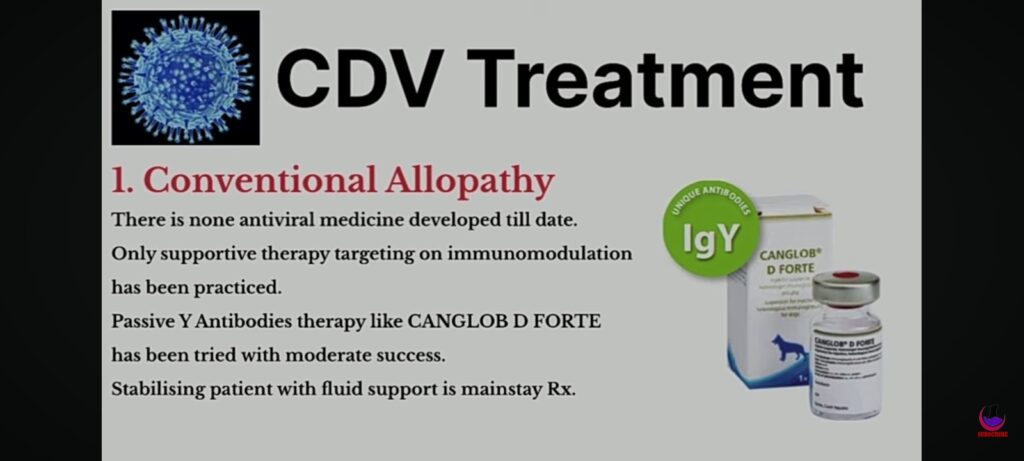
Because there is no direct antiviral cure for Canine Distemper, traditional veterinary advice is often grim. However, there are supportive treatment strategies that you can discuss with a certified veterinarian to give your dog a fighting chance.
1. Conventional Allopathic Care
The main goal here is stabilization and symptom management:
Intravenous (IV) Fluid Therapy: Critical to fight dehydration caused by vomiting and diarrhea, and to deliver necessary nutrients when the dog refuses to eat.
Anti-Seizure Medications: Used to control neurological fits.
Hyperimmune Serum: There are specialized Y-antibody treatments available globally (such as Canglob D Forte). While highly expensive and requiring multiple vials with no guaranteed results, it is an option affluent pet parents explore under strict veterinary supervision to boost immediate immunity.
2. Alternative Supporting Therapies
Many pet owners combine allopathic treatment with alternative medicine to support the dog’s body and manage symptoms.



(Caption: Alternative and holistic support therapies used for CDV management)
Homeopathy (Distemperinum 200): Remedies like Distemperinum 200ch dilution are frequently used globally as an alternative support therapy to manage chronic symptoms with minor supportive success.
Ayurveda & Herbal Care: Natural supplements and ingredients containing anti-inflammatory and antiviral properties—such as Curcumin, Manuka Honey, or specialized pet-safe Cannabis leaf extracts (CannaPaw)—can help soothe muscle twitching, protect cellular damage, reduce neurological stress, and support overall cellular health.
Prevention: The Only True Cure
With a mortality rate hovering near 90% in untreated or severe cases, trying to treat distemper is a desperate uphill battle. The only foolproof way to protect your dog is through timely vaccination.
Core puppy vaccines (DHPP/DHLPP) protect against Canine Distemper. Ensure your puppies receive their full initial rounds and that your adult dogs get their routine booster shots. It is a quick, affordable step that completely eliminates the threat of this horrific disease. Always stay closely connected with your local veterinarian to keep your pet’s vaccination schedule up to date.