
Have you ever wondered what goes through your dog’s mind when they look at you? We feed them, walk them, and consider them family. However, understanding dog psychology truths reveals that our pets perceive us in ways far more ancient, complex, and profound than we realize.
In this comprehensive guide, we will uncover 15 fascinating dog psychology truths that explain canine behavior, chemical bonding, and how dogs truly view their human companions.
Key Dog Psychology Truths Explained
They Do Not Understand “Forever”
Dogs measure time through natural environmental rhythms—sunrise, hunger, and your daily presence. When you step out the door, they do not hold a human concept of “never.” Instead, they live in perpetual hope waiting for the rhythm to restore.
Holding your scented clothing helps them feel your presence, keeping their anxiety grounded while waiting for the pack to reunite.
They Smell Your Biological Chemistry
You can never lie to a dog. While humans rely on words and facial expressions, dogs read body chemistry. When you experience fear, anxiety, or sadness, your body releases stress hormones like cortisol and alters sweat composition.
To a canine’s sensitive nose, sadness has a distinct biological scent. When they press close during tough moments, they are reacting directly to your physical chemistry.
Dogs Act as Living Biological Diagnosticians
A canine’s nasal system is up to 100,000 times more acute than ours. Cellular changes caused by illness release volatile organic compounds through breath and skin.
You Are Their Biological Safety Switch
In nature, animals maintain chronic vigilance to stay safe from predators. However, when a dog looks at their bonded human, their oxytocin levels spike while cortisol levels plummet.
Your presence acts as a physical safety switch, allowing them to lower their guard and experience deep, restorative sleep.
Energy Mirroring and Contagious Yawning
Contagious yawning is an empathetic behavior shared primarily among highly social species. When your dog yawns after you or mirrors your activity level, they are tuning into your emotional frequency.
This ancient pack survival mechanism ensures that the entire group rests and moves as one cohesive unit.
The Purpose of the Walk “Check-In”
While exploring off-leash or on a long lead, dogs frequently turn around to make brief eye contact before continuing.
This behavior is called a “check-in.” It demonstrates that they view you as a partner and leader, constantly tethering their freedom to your location.
Why Dogs Lean Their Weight Against You
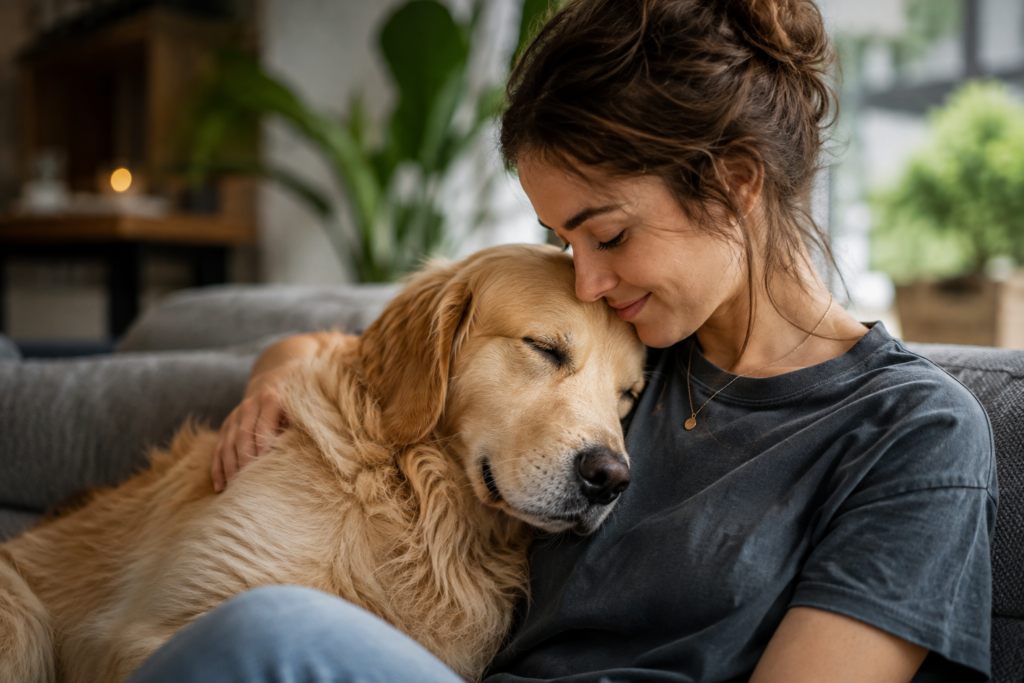
Leaning is the canine equivalent of a full-body hug. When unsure, dogs lean on you to borrow your physical stability.
Conversely, confident dogs lean against you to offer quiet comfort. It is a physical manifestation of trust and shared space.
The Chemistry of Soft Eye Contact
In the wild, intense staring signals aggressive confrontation. However, dogs have evolved to share soft, relaxed eye contact with trusted humans.
A study from the University of Sussex Research Team demonstrated that mutual soft gaze releases oxytocin in both species, chemically strengthening the bond.
They Categorize Humans Differently Than Dogs
Neurological brain scans reveal that a dog’s reward centers activate uniquely when exposed to their owner’s scent compared to other dogs.
They understand that humans are not merely large dogs; they view us as unique protectors, providers, and companions.
High-Energy Greetings Cause Mixed Stress
Rushing through the front door with loud, excited greetings can overstimulate a dog. Research conducted at Oregon State University Canine Lab suggests that remaining calm for the first minute after returning home provides better emotional stability for pack animals.
Scent-Sharing Rituals Build Pack Unity
When your dog rubs their face or cheeks against your legs, they deposit scent from facial glands to mark you as family.
Gently petting their forehead and cheeks afterward merges your scents into a single “family profile,” which significantly reduces conflict in multi-pet homes.
The Need for Safe Dens and Elevated Vantage Points
Dogs naturally seek out small, enclosed spaces (like cardboard boxes or cozy corners) to lower stress. Additionally, providing raised resting stations or window perches allows them to observe their surroundings safely, reducing daily anxiety.
Completing the Predatory Play Cycle
Games like fetch and tug-of-war activate natural hunting instincts (tracking, chasing, grabbing, and winning).
To keep your dog mentally balanced, allow them to “win” tug toys or receive a treat at the end of playtime to successfully close their neurological reward circuit.
Mental Stimulation Through Foraging
Serving kibble exclusively in a bowl removes the mental challenge dogs naturally seek.
Using snuffle mats, puzzle toys, or hiding small food portions engages their evolutionary problem-solving abilities and prevents destructive behaviors.
Choice and Autonomy Strengthen Love
Forcing physical affection or constant closeness can create subtle pressure. Dogs form deeper, more authentic attachments when given autonomy—the freedom to approach, choose resting spots, and step away when needed.
When you respect their personal space, they will almost always choose to return to your side.
Final Thoughts on Essential Dog Psychology Truths
Understanding these fundamental dog psychology truths transforms how we interact with our pets daily. By respecting their body language, sensory needs, and emotional boundaries, we shift from simple pet owners to true pack partners.
Applying these subtle adjustments to your daily routine builds an unbreakable foundation of trust, comfort, and lifelong companionship.