
Housebreaking a new dog is one of the most important first steps for any pet parent. If you want to potty train a puppy quickly without stress or constant indoor accidents, having a clear and consistent routine is the secret.
In this comprehensive guide, you will learn a simple 7-step system to potty train a puppy effectively, whether you live in an apartment or a house with a yard.
Why Consistency is Key
Young dogs have tiny bladders and weak bowel control. Expecting a young pup to hold it for several hours is unrealistic.
To potty train a puppy successfully, you must prevent accidents before they happen.
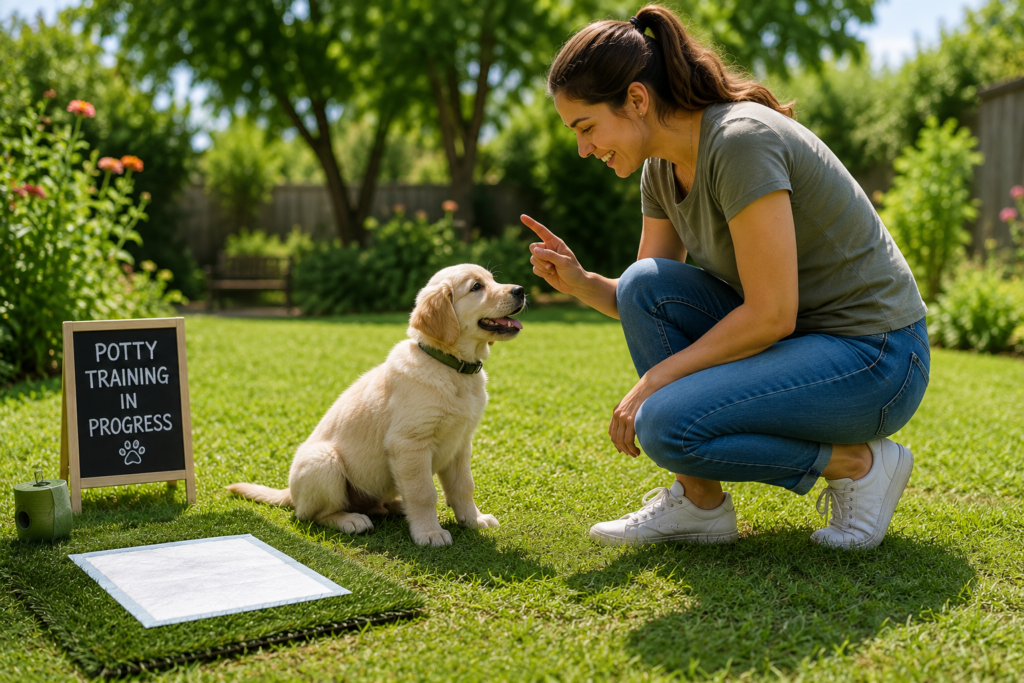
Step 1: Set a Strict Feeding Routine
- What goes in on a schedule comes out on a schedule.
- Fixed Times: Feed your pup 3 to 4 times daily at the exact same hours (e.g., 6:00 AM, 11:00 AM, and 4:00 PM).
- Remove Food After 20 Minutes: Do not leave food bowl out all day. Free-feeding makes potty timing unpredictable.
- Cut Off Late Water: Stop offering large amounts of water about 2 hours before bedtime to prevent midnight trips.
Step 2: Take Frequent Potty Breaks
- When you begin to potty train a puppy, frequency is your best friend.
- Take your puppy to their spot:
- Immediately after they wake up in the morning.
- 10 to 20 minutes after every meal.
- Right after nap time or play sessions.
- Every 1 to 2 hours throughout the day.
Step 3: Establish a Designated Potty Spot
Choose one specific area outside (or on an indoor pee pad).
Take them to the exact same spot every time. Their own residual scent will prompt them to go faster.
Step 4: Use a Specific Cue Word
Dogs associate actions with sounds.
As soon as your pup begins to eliminate, repeat a specific cue phrase like “Go potty” or “Do your business” in a calm voice. Over time, your pup will learn to go on command.
Step 5: Reward with High-Value Treats
Timing is everything when you potty train a puppy.
Reward Immediately: Give them a special treat (like freeze-dried liver or boiled chicken) within 3 seconds of finishing.
High-Value Only: Save these specific treats exclusively for successful potty runs.
Step 6: Eliminate Past Odors with Enzymatic Cleaner
If your pup smells past accidents indoors, they will repeat the behavior in that spot. Standard household cleaners fail to break down uric acid.
Always use an Enzymatic Pet Cleaner to completely erase organic scent markers.
Step 7: Manage Indoor Accidents Correctly
Accidents will happen during the learning phase.
Catch Them in the Act: Say a calm but firm “No” or “Outside,” pick them up, and carry them to their spot.
Never Punish After the Fact: If you find a mess later, do not scold or rub their nose in it. Dogs cannot connect past events to current punishment.
How to Potty Train an Adult Dog
Potty training an adult dog follows similar rules, with a few adjustments:
Two Meals Daily: Feed adult dogs at 6:00 AM and 3:00 PM. Avoid late-night meals.
Firm Up Stool: Add 1–2 tablespoons of 100% pure canned pumpkin puree to their food for soluble fiber.
Deep Clean: Use enzymatic spray on all carpets and furniture where previous accidents occurred.
Frequently Asked Questions
How long does it take to potty train a puppy?
With strict consistency, most puppies grasp the basics in 3 to 7 days. Full housebreaking reliability usually takes 4 to 6 months.
Can I potty train a puppy using pee pads?
Yes! If you live in an apartment, place pee pads in a dedicated corner and use scent markers to guide them.
Final Thoughts
Learning how to potty train a puppy requires patience, clear schedules, and immediate positive reinforcement. Stick to this routine for 7 days, and you will see dramatic improvements in your dog’s behavior!