
Effective dog training is the secret to building a strong, happy, and stress-free relationship with your pet. Whether you just brought home an energetic puppy or want to polish your adult dog’s daily manners, adopting a scientific approach based on positive reinforcement is the fastest way to achieve reliable results.
In this ultimate dog training guide, we will break down essential gear, food drive tactics, common pitfalls to avoid, and seven easy step-by-step drills you can practice at home.
Essential Gear for Effective Dog Training
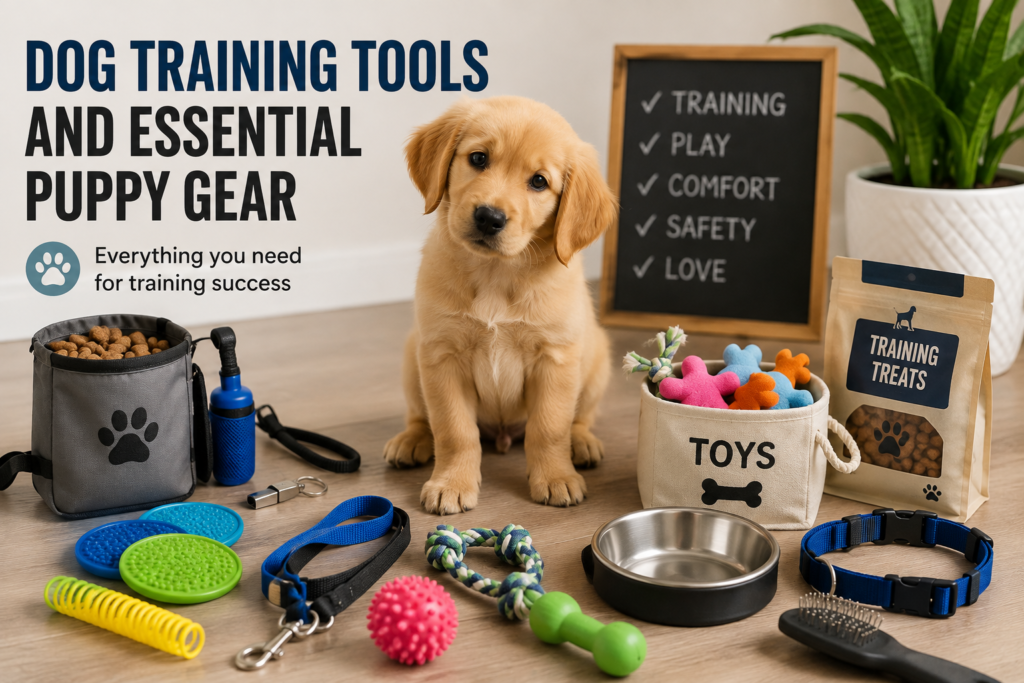
Before starting any session, make sure you have the right tools to set your dog up for success. Using high-quality gear ensures safety, comfort, and clear communication.
EquipmentPurpose & Best Use
4-Foot Nylon LeashIdeal length for close control, safety, and teaching leash pressure properly.
Flat-Buckle or Martingale CollarProvides safe, gentle control without causing neck distress or injury.
Place Bed (Climb Bed)Essential for boundary control and teaching a reliable stay command.
Treat Pouch / Training VestKeeps food rewards easily accessible for fast timing and delivery.
Agility ConesGreat for teaching directional movement, spatial awareness, and “Around” cues.
Unlocking Food Drive: Why Ditching the Bowl Works
A frequent error pet parents make in dog training is relying heavily on high-calorie, sugary store-bought treats. Instead, leverage your dog’s daily kibble allotment to build focus and natural enthusiasm
Make Meals an Interactive Experience
- Divide Daily Kibble: Measure out your dog’s total daily food portion and split it into four equal parts.
- Reward Good Habits: Use three portions purely for active training sessions throughout the day. Save the remaining portion for spontaneous good behavior rewards.
- Build Working Motivation: Dogs are natural foragers. Working for their sustenance boosts focus, mental stimulation, and engagement with you.
If your pup shows low motivation during a session, simply put the food away and try again later. Never force food when your dog is over-aroused or distracted.
The 0–5 Environmental Distraction Scale in Dog Training
Dogs do not automatically generalize behaviors across different settings. A cue mastered in your quiet hallway won’t instantly work at a bustling park. Always evaluate your environment using this scale:
- Level 0: A quiet room inside your house with zero noise or distractions.
- Level 1–2: Your private backyard or a quiet driveway.
- Level 3–4: A quiet neighborhood sidewalk with occasional cars or walkers passing by.
- Level 5: A crowded local park with squirrels, running kids, and other dogs.
- Pro Tip: Always introduce brand-new commands at Level 0. Only increase environmental difficulty once your dog achieves a 90% success rate at the current level. For recognized health and behavior guidelines, you can consult authoritative resources like the American Kennel Club (AKC).
6 Common Dog Training Mistakes You Must Avoid
- To keep your dog training journey smooth and stress-free, avoid these six frequent missteps:
- Yelling at Your Dog: Raising your voice creates unnecessary anxiety or causes your pup to tune you out completely. Save firm vocal tones strictly for urgent emergencies.
- Training While Frustrated: Dogs are hyper-aware of human emotion. If you feel annoyed, take a break immediately.
- Using Dominance Tactics: Forcing a dog onto its back (the “Alpha Roll”) is outdated and counterproductive. Modern training relies on clear rewards and teamwork.
- Snatching Objects: Forcibly pulling items from their mouth triggers resource guarding and possessiveness. Always trade for a higher-value reward or teach a solid drop command.
- Rewarding Anxious Behavior: Petting a barking dog while saying “It’s okay” accidentally reinforces the nervous behavior. Wait for quiet before giving affection.
- Allowing Leash Pulling: If your dog pulls on the leash, freeze in place instantly. Moving forward rewards the pulling behavior.
Core Concepts of Positive Reinforcement Dog Training
- Understanding the psychology behind how dogs learn will dramatically speed up your results.
- Using Marker Words
- A marker word (such as “Yes!” or “Free!”) acts as a precise bridge signal. It pinpoints the exact millisecond your dog performed the correct action.
- Golden Timing Rule: Say Marker Word \rightarrow Pause 0.5 Seconds \rightarrow Deliver Treat Reward.
If You Love It, Name It”
Never attach a verbal command (like “Sit” or “Down”) until your pup performs the physical motion smoothly and reliably.
Correct Sequence: Verbal Cue \rightarrow Physical Prompt/Lure \rightarrow Mark (“Yes!”) \rightarrow Reward.
Implied Stay vs. Release Signals
When you ask for a position like “Sit” or “Down,” the stay should be automatically implied. Your dog must hold the position until you give a clear release word:
”Free”: Means “Task complete + you get a treat + you are released.”
”Break”: Means “You are released from position” (without an immediate food reward).
7 Step-by-Step Dog Training Exercises to Start Today
Here are seven simple, highly effective drills you can start practicing with your dog today.
Exercise 1: The Hand Touch (Targeting)
Present your open palm two inches away from your dog’s nose. The instant their nose touches your hand, mark with “Yes!” and deliver a treat from your opposite hand. This builds focus and hand-following skills.
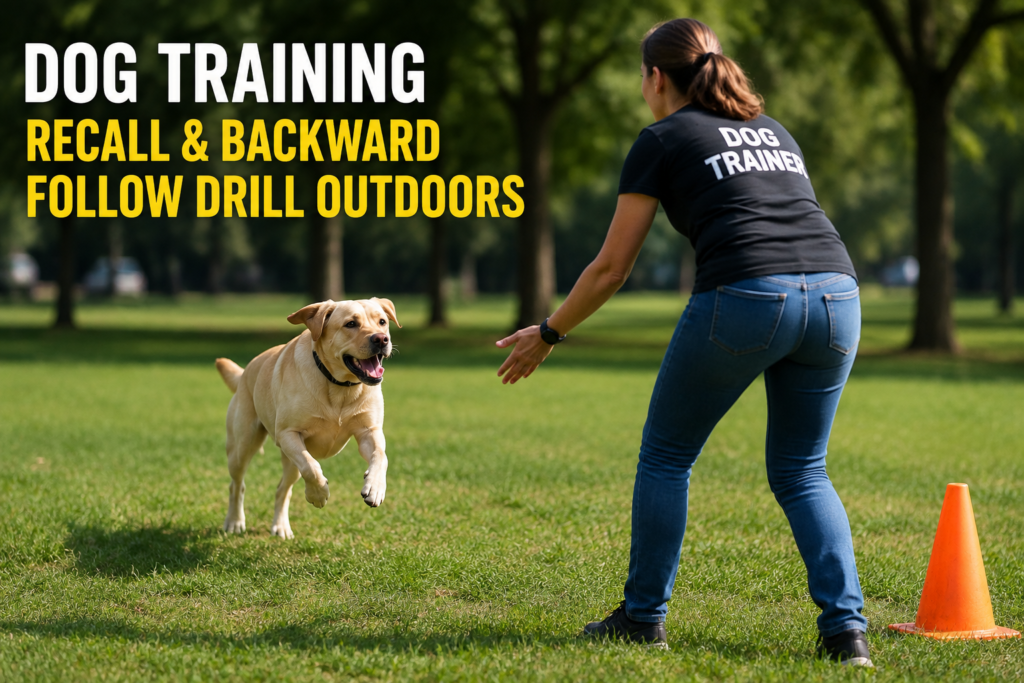
Exercise 2: Backwards Follow (Recall Foundation)
Step briskly backward while encouraging your dog to follow your motion. As soon as they catch up to you, mark and reward. This creates excitement for coming when called.
Exercise 3: The “Chasing Prey” Feeding Game
Avoid shoving treats directly into your dog’s mouth, which slows down their energy. Instead, toss or slide the treat slightly away from them so they have to pounce or chase it down.Home
Exercise 4: Lure-and-Reward “Sit”
Hold kibble right at your dog’s nose level and slowly move it backward over their head. As their nose tilts up, their bottom will naturally touch the floor. Mark “Yes!” and reward instantly.
Exercise 5: Spin & Twist (Body Awareness)
Guide a treat in a smooth circle around your dog’s nose to lead their body into a full turn. Practice clockwise (“Spin”) and counter-clockwise (“Twist”) to build agility and body awareness.
Exercise 6: Place Command (Boundary Work)
Lure your dog onto a dedicated climb bed or mat. Once all four paws are on the mat, mark “Yes!” and feed several treats in quick succession to make the place valuable.
Exercise 7: Leash Pressure & Yielding
Apply gentle upward or sideways pressure on the leash. The moment your dog takes a step toward the pressure to release it, mark “Yes!” and reward. For more guidance on setting up routine care, check out our Puppy Behavior & Care Guide.
Conclusion
Consistency and patience are the ultimate keys to long-term success in dog training. Keep your daily sessions short—around 1 to 3 minutes, performed two or three times a day. Always end every session on a positive note while your dog is excited, happy, and eager for more!