
If you own a light-colored dog—such as a Poodle, Maltese, Bichon Frise, or Shih Tzu—learning how to get rid of dog tear stains is likely high on your priority list. Those persistent reddish-brown streaks under your pup’s eyes can make a clean, healthy dog look constantly tired or unwell.
Many pet parents assume these dark streaks are caused by dirt or poor hygiene. However, dog tear stains are actually an internal biological issue linked to your pet’s diet, gut health, and tear duct function.
In this complete guide, you will learn the exact cause behind dog tear stains and 12 proven, vet-backed ways to clear them up naturally.

What Causes Dog Tear Stains?
The medical term for excessive tearing is epiphora. When tears overflow onto your dog’s face, a natural compound called porphyrin accumulates on the fur. Porphyrins contain iron, which is produced when your dog’s body breaks down old red blood cells.
When this iron-rich fluid sits on facial hair and is exposed to oxygen and sunlight, it oxidizes—turning the hair a rusty reddish-brown color.
Common causes of dog tear stains include:
Inflamed or blocked tear drainage tubes
Cheap synthetic iron additives in commercial dog kibble
Food or environmental allergies
Secondary yeast and bacterial skin infections
My Personal Experience: How I Finally Cleared My Dog’s Stains
When I first noticed those deep reddish-brown streaks forming under my dog’s eyes, I tried everything I could find at the pet store. I bought expensive $20 tear stain wipes, tried daily face washing, and even bought special powders that claimed to vanish stains overnight. Nothing worked—the rusty marks kept coming right back, making my pup look constantly teary and uncomfortable.
It wasn’t until I stopped focusing only on cleaning the outside and started addressing the problem from the inside that I saw real results.
The biggest turning point for me was switching away from low-quality kibble with synthetic iron and introducing daily warm green tea compresses. Within just 14 days of opening up those blocked tear ducts and making simple dietary adjustments, the heavy tear overflow stopped. Once I trimmed away the old stained hair, the new fur grew back completely clean, white, and healthy!
Quick & Topical Solutions
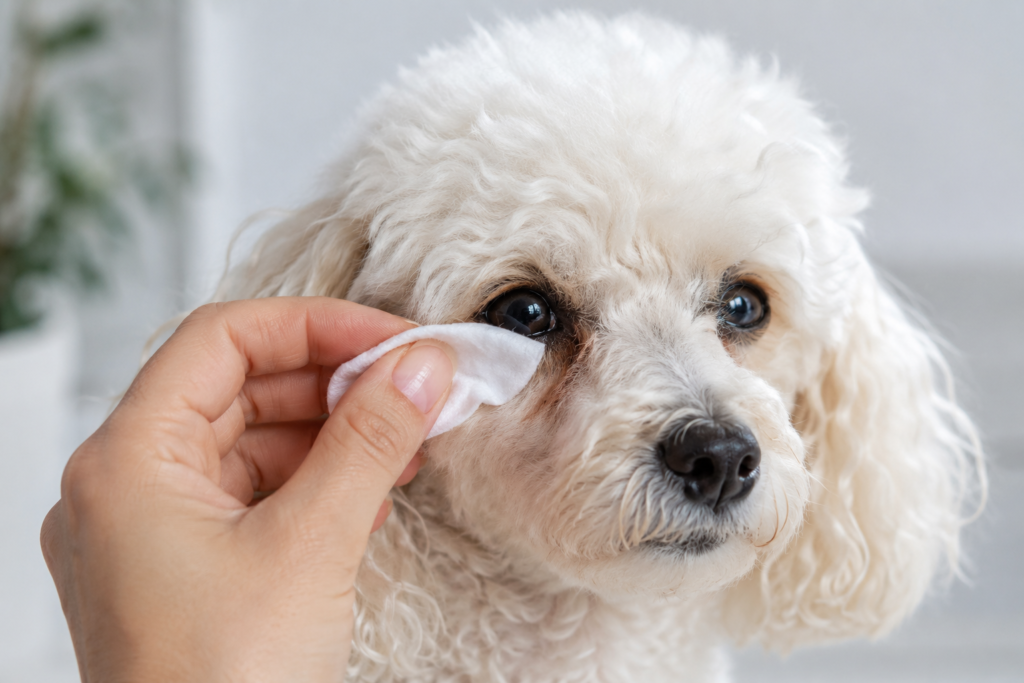
Use Gentle Tear Stain Wipes
Cleaning the damp fur beneath the eyes daily with gentle, pet-safe wipes removes liquid tear buildup before porphyrins can oxidize into stubborn stains.
Trim Stained Fur Carefully
tear overflow has stopped but old dark streaks remain, carefully trim the stained hair tips using blunt-nosed grooming scissors.

The Natural Cornstarch Method
Apply a small dab of plain cornstarch directly onto damp facial fur. As it dries, the starch binds to liquid debris and porphyrin pigments, which can then be brushed away easily with a soft cloth.
Unblocking Tear Ducts Naturally
Lukewarm Water Compresses
Holding a warm, damp cloth against the inner corner of your dog’s lower eyelid for 30 seconds helps loosen crusty buildup and soothes minor tissue swelling
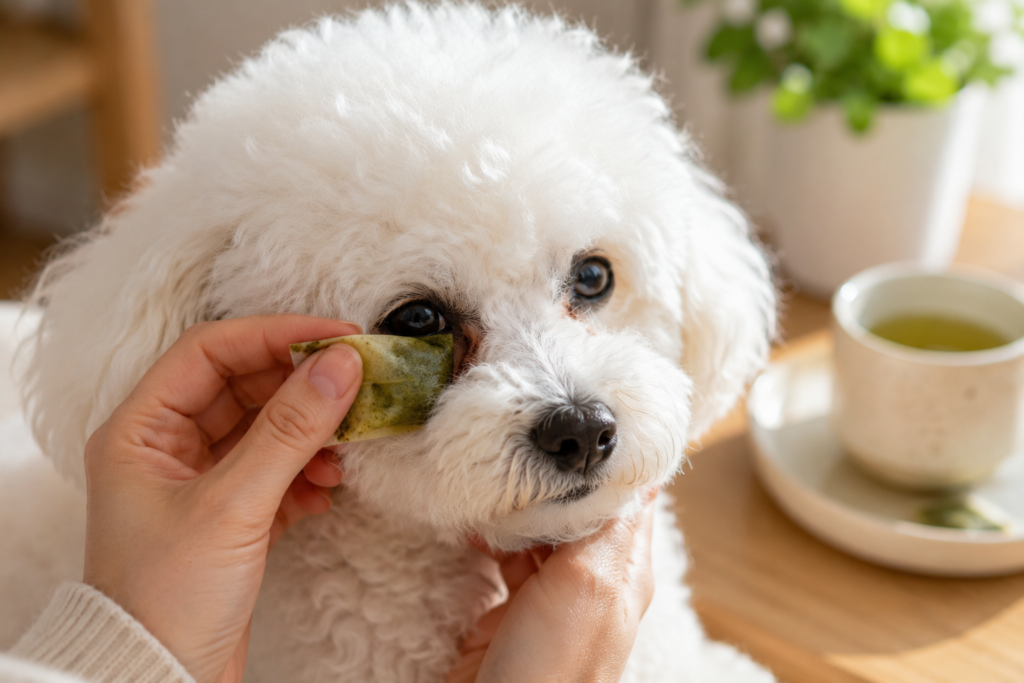
Green Tea Compress
Green tea is packed with natural anti-inflammatory compounds. Applying a cooled, warm green tea bag to the lower eyelid for 30 to 60 seconds opens blocked tear ducts, allowing tears to drain naturally through the nose.
Treating Secondary Infections
Chronically wet facial fur creates an ideal environment for yeast and bacteria to multiply.
Warning: Never use harsh household products like hydrogen peroxide or apple cider vinegar anywhere near your dog’s eyes. They can cause severe pain and permanent corneal damage.
Colloidal Silver & Organic Coconut Oil
Colloidal silver acts as an eye-safe antimicrobial wipe. Following up with a microscopic dab of organic coconut oil creates a waterproof barrier, preventing new tears from soaking into the hair.
. Over-the-Counter Antifungal Creams
If the skin beneath the eye is raw, bright red, and smells musty, apply a tiny dab of mild antifungal cream (like Clotrimazole) strictly to the infected skin well below the lower eyelid.
Dietary Fixes for Dog Tear Stains
Eliminate Cheap Kibble with Synthetic Iron
Low-grade synthetic minerals in cheap commercial dog food flood your dog’s system with surplus iron waste, drastically increasing porphyrin levels in their tears.

Switch to a Balanced Home-Cooked Diet
balanced diet consisting of 1/3 fresh lean protein (turkey/chicken), 1/3 healthy carbohydrates (sweet potato/brown rice), and 1/3 low-iron vegetables (carrots/kale) significantly reduces dog tear stains.
Vitamin C Supplementation
Vitamin C improves iron absorption in your dog’s digestive tract, leaving less surplus iron waste to be excreted through tear fluids.
Daily Canine Probiotics
Giving your dog a high-quality daily probiotic regulates gut health, lowers systemic inflammation, and prevents facial yeast flare-ups.
Paw and Ear Hygiene
Clean Ears and Paws Regularly
Dogs frequently rub their eyes with their paws. Cleaning their ears and wiping dirty paws after walks prevents harmful bacteria from transferring to sensitive eye tissues.
When to See a Veterinarian
While most cases of dog tear stains can be managed with home care, consult your veterinarian immediately if your dog squints constantly, rubs their eyes aggressively, or displays yellow/green eye discharge.