
If you are a pet parent in the United States, you want to learn how to raise a happy dog. You likely spend hours scrolling through TikTok, watching YouTube tutorials, or reading endless online guides.
You buy the most expensive toys, orthopedic beds, and organic treats.
But here is the raw, unfiltered truth: most modern pet parenting advice is tailored for human convenience and emotional comfort, not for actual canine psychology. If you want to raise a happy dog, you must look past the marketing fluff.
I am not a typical dog trainer who learned everything from a textbook. I live in a unique, heavily forested environment where I manage a massive pack of 40 dogs.
Yes, 40 dogs living, eating, and interacting together daily.
Managing a pack of this size has taught me a unique code. If you want to raise a happy dog in your suburban home or city apartment, you need to understand these primal secrets.
Why Understanding Pack Behavior is the Only Way to Raise a Happy Dog
To truly understand your pet, you must look at how a large group of canines coexists without chaos. Dogs are not furry humans. They do not think, react, or process emotions the way we do.
When people try to humanize their pets, they inadvertently create behavioral issues. True balance comes from respecting their natural instincts. Here are the 11 shocking secrets that will show you exactly how to raise a happy dog.
1. The Energy Metric: Why Your Apartment Size Doesn’t Matter
In the U.S., there is a massive misconception about living spaces. People looking for a pet often think a small apartment requires a small breed like a Beagle or a Jack Russell Terrier.
This is a rookie mistake that often leads to destroyed furniture and endless barking. A Beagle is a scenthound bred to run miles tracking game.
A Jack Russell has an engine that never shuts off.
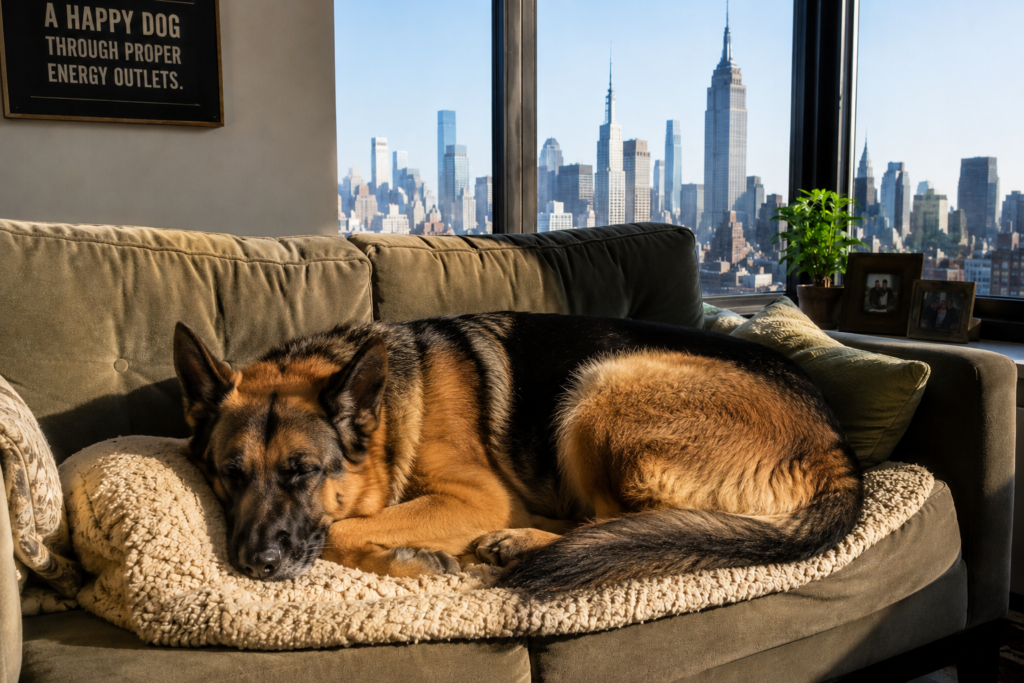
A dog’s happiness is not measured in the square footage of your home. It is measured by their daily energy outlet.
In my pack, I have dogs of all sizes. I have seen massive dogs who are absolute couch potatoes thrive in tight spaces because their minds are at peace.
Match your dog’s specific energy line to your actual daily lifestyle, not to the size of your living room.
2. The 8-Week Rule: Mother Nature’s Training School
Go to any shady backyard breeder in the States, and they will try to push puppies out the door at 5 or 6 weeks old. They do this to save money on food and maximize profits.
When a litter is born in my pack, I step back and let the mother dog handle the heavy lifting. Between weeks 8 and 12, something magical happens.
This is the exact period where the mother teaches bite inhibition.
When a puppy plays too rough, the mother steps in with a sharp, timed correction. This is where a canine learns social boundaries and emotional regulation.
When you purchase a puppy ripped away at 40 days, you bring home a canine that missed its primary education. To raise a happy dog, never cut this crucial canine schooling short.
3. True Socialization Means Neutrality, Not Constant Play
One of the biggest trends in American pet culture is the obsession with puppy playdates. Owners take their young pups to crowded dog parks or force them to greet every stranger on the sidewalk.
True socialization does not mean your pet interacts with everyone and everything. In my 40-dog pack, dogs do not constantly play or touch each other.
In fact, 95% of their day is spent coexisting in complete silence and neutrality. Forcing an anxious pup to greet a hyperactive dog triggers intense leash reactivity.
True socialization means teaching your canine to be completely neutral and calm in the presence of chaos. They should look to you for direction, not to the world for excitement.
4. Crate Training: Understanding the Primal “Den Instinct”
There is a massive debate in American pet forums about crate training. Well-meaning but misinformed owners often view the crate as a cruel cage.
Dogs are evolutionary den animals.
In the wild forest environment, my dogs naturally seek out small, covered, dark, and tight spaces when they want to sleep or decompress.
A crate is not a prison; it is a synthetic den. When you introduce a crate correctly from day one using positive reinforcement, it becomes your dog’s sanctuary.
In a chaotic human household full of loud televisions and ringing doorbells, a crate provides a psychological safe haven. It allows them to completely switch off their guard instinct and relax.
5. Leash Safety: Why Chest Harnesses Can Cause Silent Injuries
Walk into any major U.S. pet retail chain, and they will recommend a chest harness for a pulling dog. It looks comfortable and human-friendly, but the physics are dangerous.
If your pet constantly pulls, a chest harness can cause long-term structural damage. These straps cross over the shoulder blades, altering their natural gait and leading to early-onset arthritis.
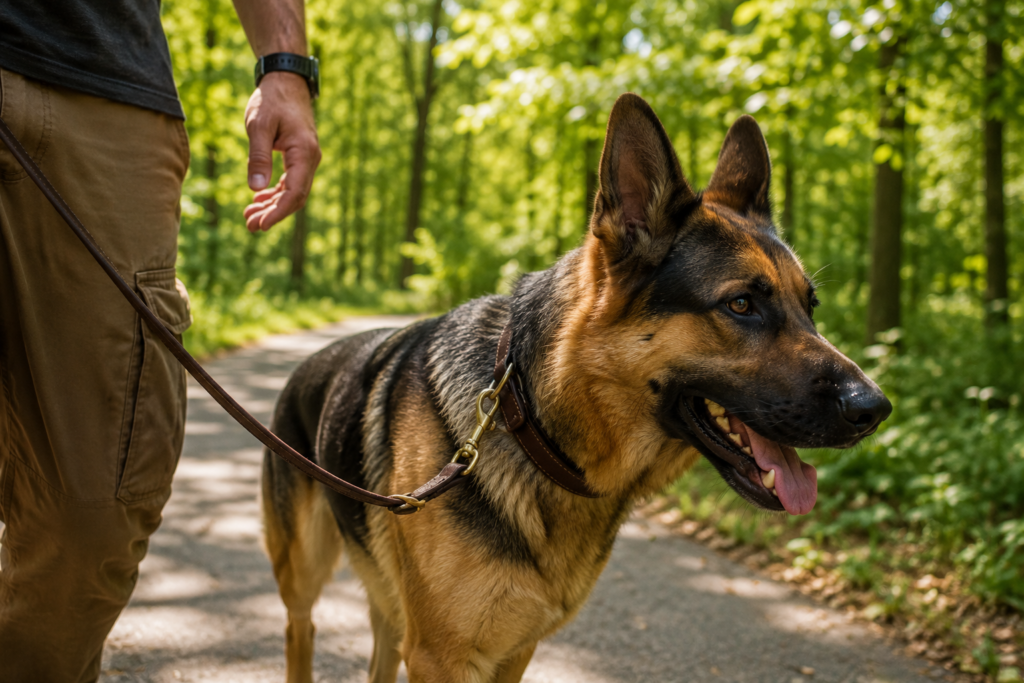
Furthermore, a tight chest strap puts immense pressure on their thoracic cavity during hot summers. Canines do not sweat; they cool their bodies down by panting.
If their chest is compressed, they cannot expand their lungs fully, drastically increasing the risk of sudden heatstroke.
According to authoritative canine health studies, alternative tools like a martingale collar offer much safer communication.
6. The Pack Secret to Stopping Leash Pulling
In my pack of 40, no dog is allowed to drag me around. Dogs pull because they think they are leading the walk and exploring territory ahead of you.
To fix this without damaging their skeletal system, use a slip-leash or a martingale collar. The moment your pet tries to move ahead of your knee, do not yank back.
Instead, immediately change your direction by 180 degrees. This simple movement forces the canine to pay attention to your body rather than pulling you down the street. It builds a cooperative bond during walks.
7. Case Study: The Reformation of Rocky
To understand how powerful these pack dynamics are, let me tell you about Rocky. Rocky was a rescue who came to me with extreme fear-aggression and a history of biting handlers.
In a typical suburban home, Rocky was a ticking time bomb. His previous owners tried clicker training and heavy medication, but nothing worked.
When Rocky entered my pack, he tried his old tactics. He bared his teeth and lunged during feeding time. In a human home, people react with panic, which validates the dog’s anxiety.
My pack reacted with absolute, unbothered calmness. The stable alpha dogs simply ignored his tantrums. Within three weeks, Rocky learned that his aggression didn’t grant him power. He mirrored the stable energy of the pack and is now a gentle, balanced companion.
8. Mental Stimulation: The Brain Games That Actually Tire a Dog
Many American owners think that a two-mile jog is the only way to tire out a high-energy pet. Yet, they find that their pet rests for 20 minutes and wakes up with even more chaotic energy.
Physical exercise builds physical stamina. If you only run your pup, you are simply creating an elite canine athlete with a sky-high tolerance for exhaustion.
Mental exhaustion is far more powerful. In the forest, my dogs spend hours using their noses to track scents and navigate uneven terrain.
You can replicate this in an apartment. Stop feeding your pet out of a standard bowl. Use snuffle mats or hide kibble around the house to fire up their brain and lower stress hormones effectively.
9. The Spay/Neuter Dilemma: What New Science Says
For decades, the standard directive in the U.S. was to spay or neuter your puppy at exactly 6 months old. However, modern veterinary research shows a completely different picture.
Testosterone and estrogen are critical building blocks for a canine’s musculoskeletal system and neurological confidence. When you alter a pet too early, you freeze their development.
Studies show that early neutering drastically increases the risk of cruciate ligament tears and joint dysplasia. It can also increase fear-based defensive aggression.
Unless there is a critical medical emergency, give your dog’s body time to mature naturally. Let them keep their natural hormones until they are at least 1.5 to 2 years old so their minds and joints can fully solidify.
10. The Gut-Brain Axis: Your Food Choice Changes Their Behavior
We are currently living through a massive movement in the U.S. regarding raw feeding and clean kibble alternatives.
People are finally realizing that cheap, highly processed food causes behavioral problems.
A dog’s emotional stability starts directly in their stomach. The vagus nerve connects their gastrointestinal tract directly to their central nervous system.
Approximately 90% of a canine’s serotonin—the chemical responsible for calmness—is manufactured in their gut microbes. If you feed a diet full of heavy carbohydrates and chemical fillers, you cause chronic internal inflammation.
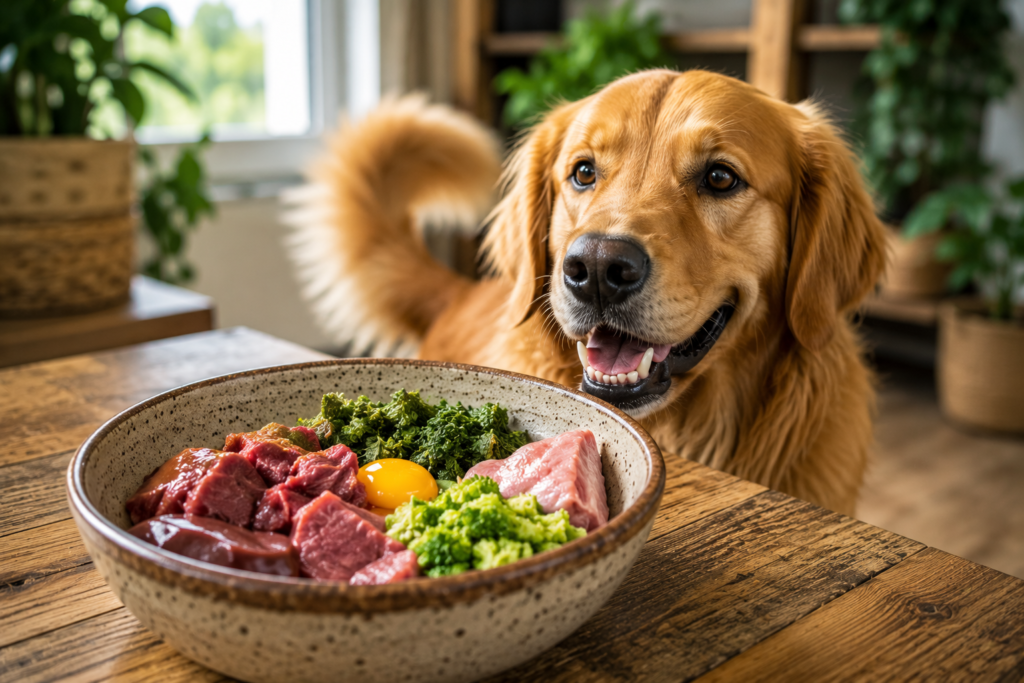
This inflammation disrupts serotonin production, creating an anxious, hyper-reactive pet. Changing to a species-appropriate, meat-based protein diet fixes more behavioral issues than hours of obedience training.
Strict Dietary Red Flags
Chocolate and cocoa products are highly dangerous because they contain theobromine, which causes severe cardiac arrhythmia in canines.
Caffeine is another strict red flag since it remains highly toxic to their central nervous system, even in tiny doses.
Grapes and raisins must be completely avoided as they can cause sudden, irreversible acute kidney failure.
Finally, swap out cheap industrial vegetable oils for clean fats like unrefined coconut oil to safely support their skin and coat health.
11. Preventing Dog Bites: The Universal Guru Mantra
The biggest irony is that the majority of dog bites happen to people who claim to be dog lovers. This happens because human love is often invasive and crosses canine boundaries.
We see a cute animal, and our instinct is to run up, smile widely, and reach our hands directly over their head. To an anxious dog, this looks like a calculated threat display.
If you want to safely interact with any canine, you must practice the universal pack rule: No Touch. No Talk. No Eye Contact.
When you enter a space with a new dog, completely ignore their existence. Stand tall, keep your body relaxed, and project calm, indifferent energy.
This gives the canine the mental space to approach you on their own terms and sniff your scent. If you panic and sprint away, you instantly trigger their primitive chasing instinct, which can lead to a bite.
Conclusion: Leadership Over Emotional Spoiling
We love our canine companions deeply, but love without leadership breeds severe anxiety. A truly stable pet isn’t one that is treated like a human infant and given zero boundaries.
To raise a happy dog, you must provide them with a calm, consistent, and capable leader. Stop projecting human emotions onto your pet, start observing their natural language, and respect the ancient code of the pack.
Frequently Asked Questions (FAQs)
Q: How do I know if I am succeeding in my goal to raise a happy dog?
A happy canine is not one that is constantly hyperactive or seeking attention. True happiness in a dog looks like absolute relaxation, a loose body posture, and the ability to rest quietly when you are not actively engaging with them.
Q: Why does my dog bark uncontrollably at the front door?
This is a clear sign of barrier frustration. Your pet feels it is their heavy responsibility to guard the house because they do not view you as the confident leader who controls the territory.
Q: Can a rescue dog with past trauma find balance?
Yes, absolutely. Canines live entirely in the present moment. If you stop feeling sorry for them and instead provide a structured environment with clear rules, they will adapt and find peace remarkably fast.
Q: How do I stop my puppy from nipping my hands?
The moment their teeth touch your skin, emit a sharp “Ouch!” and immediately freeze. Walk away and ignore them for 60 seconds. This mirrors their littermates, teaching them that biting brings an immediate end to all fun.